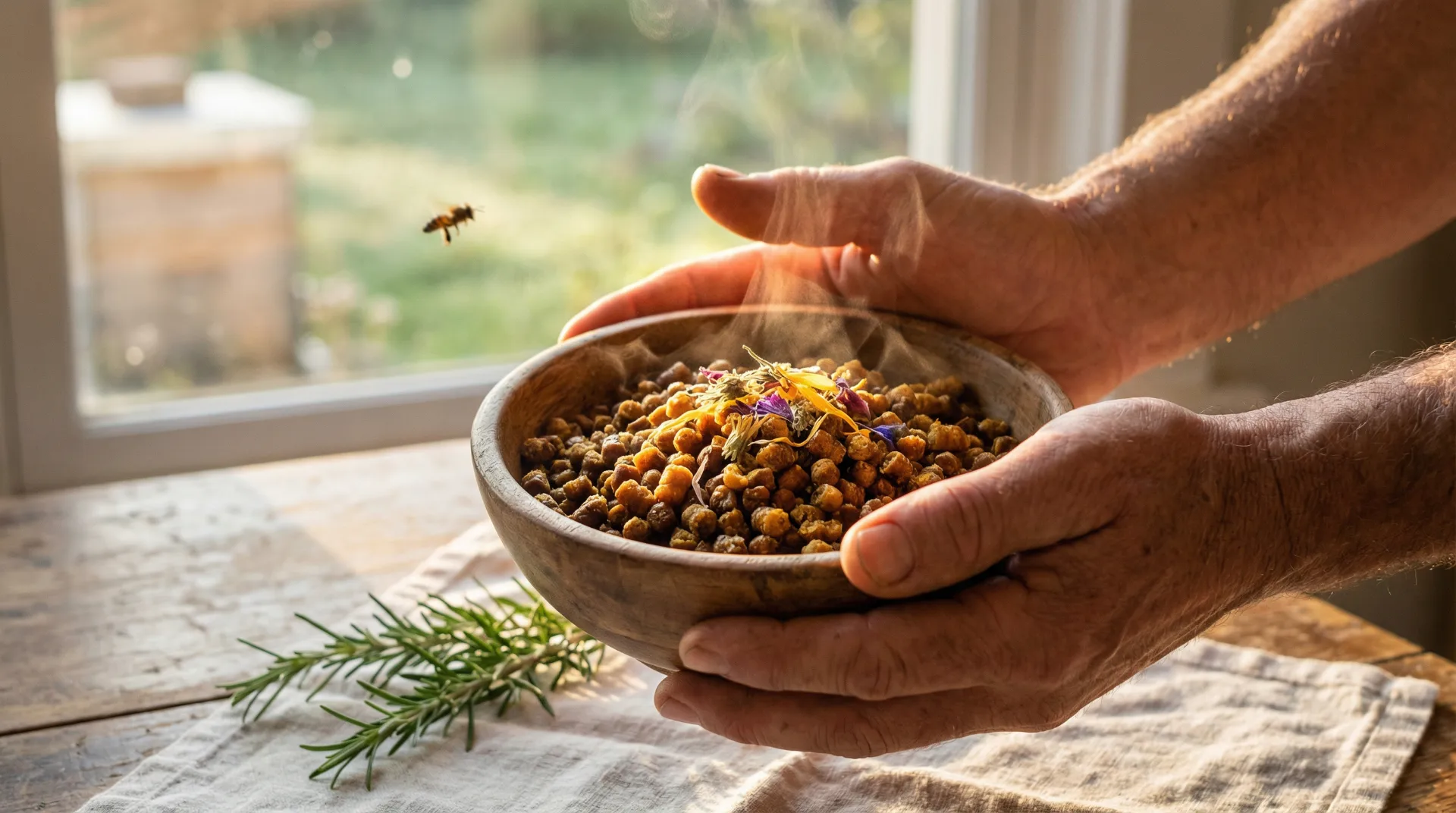
It Does Something
The Functional Power of Hive Fermentation in the Human Body
If the Fifth Ferment were just symbolic, it would already be unforgettable. But it's not just poetry — it's performance.
Hive fermentation doesn't just mean something — it does something in your gut, your immune system, your mitochondria, and your mind.
Unlike many other "superfoods," the benefits of hive-fermented bee bread don't come from marketer hyperbole or synthetic enhancement.
They come from natural complexity, multi-species synergy, and a fermentation process shaped by evolutionary intelligence.
This is real nutrition as nature intended it: living, layered, and bioactive in ways humans are only beginning to understand.
Immunity: Defense That Starts Before You're Even Sick
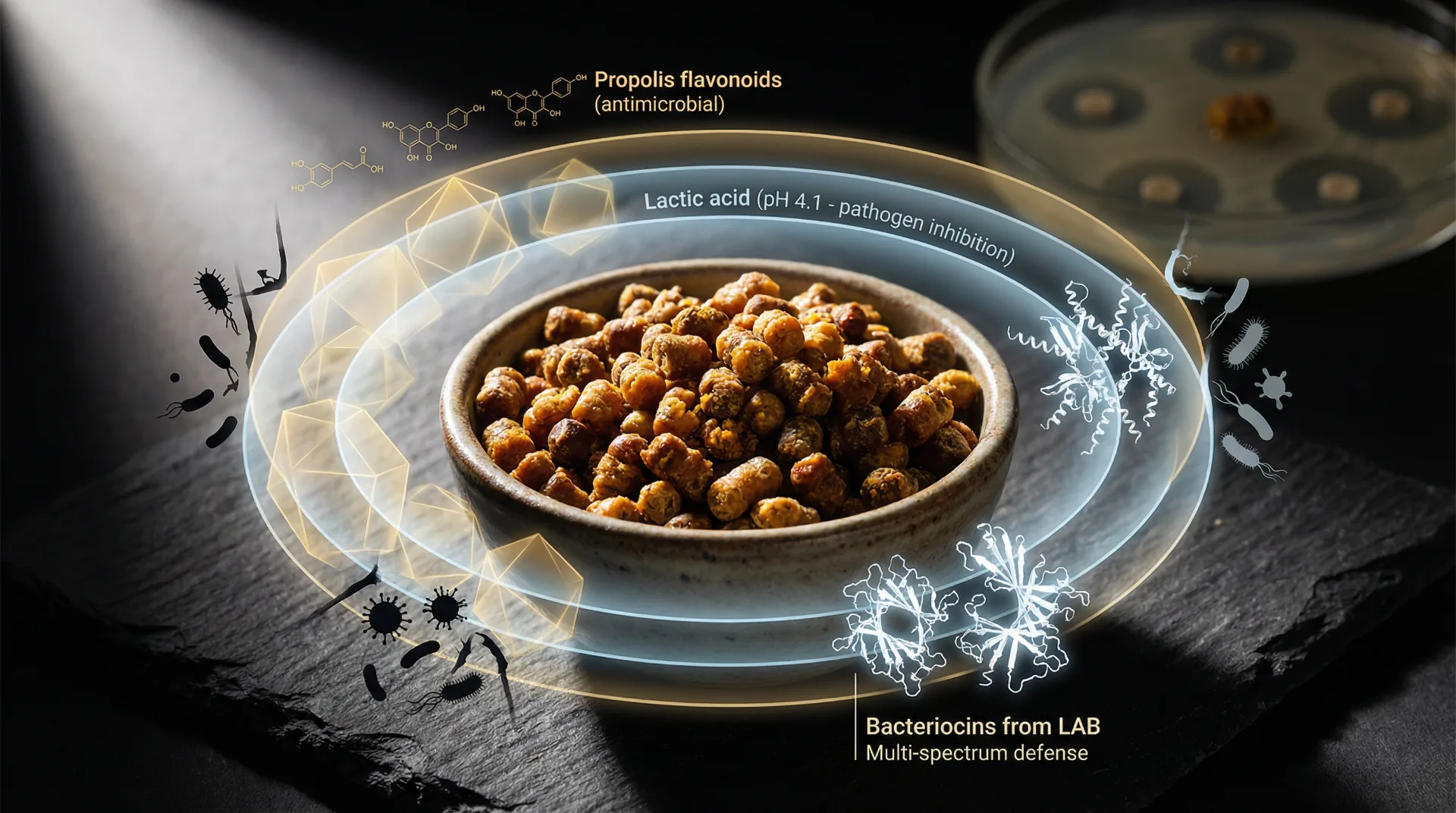
The immune benefits of hive fermentation begin in the hive itself. Bee bread exists to protect and sustain life — not just feed it. It nourishes the queen. It fuels regeneration. And it carries naturally antimicrobial, antifungal, and immunomodulating properties thanks to:
- Lactic acid bacteria (primarily Apilactobacillus kunkeei and Fructobacillus fructosus) that produce antimicrobial metabolites[1]
- Propolis-derived phenolics — including quercetin, kaempferol, and caffeic acid — with documented broad-spectrum antimicrobial activity[2][3]
- Pre-digested plant compounds (flavonoids, phenolic acids) made bioavailable through enzymatic and microbial breakdown
What the research shows:
Animal studies demonstrate that bee bread supplementation significantly reduces inflammatory markers. In obese rats, bee bread administration decreased levels of TNF-α, NF-κB, and interleukin-1β while increasing antioxidant enzymes (SOD, GPx, GST). It also reduced C-reactive protein and protected against aluminum-induced increases in inflammatory markers.
In vitro studies show bee bread extracts inhibit growth of both Gram-positive and Gram-negative bacteria, with particular effectiveness against Staphylococcus aureus, Salmonella typhi, and Candida species.
You're not just boosting immunity — you're providing raw materials and microbial allies that help regulate immune intelligence.
Digestion: Feed Your Microbiome, Not Your Cravings
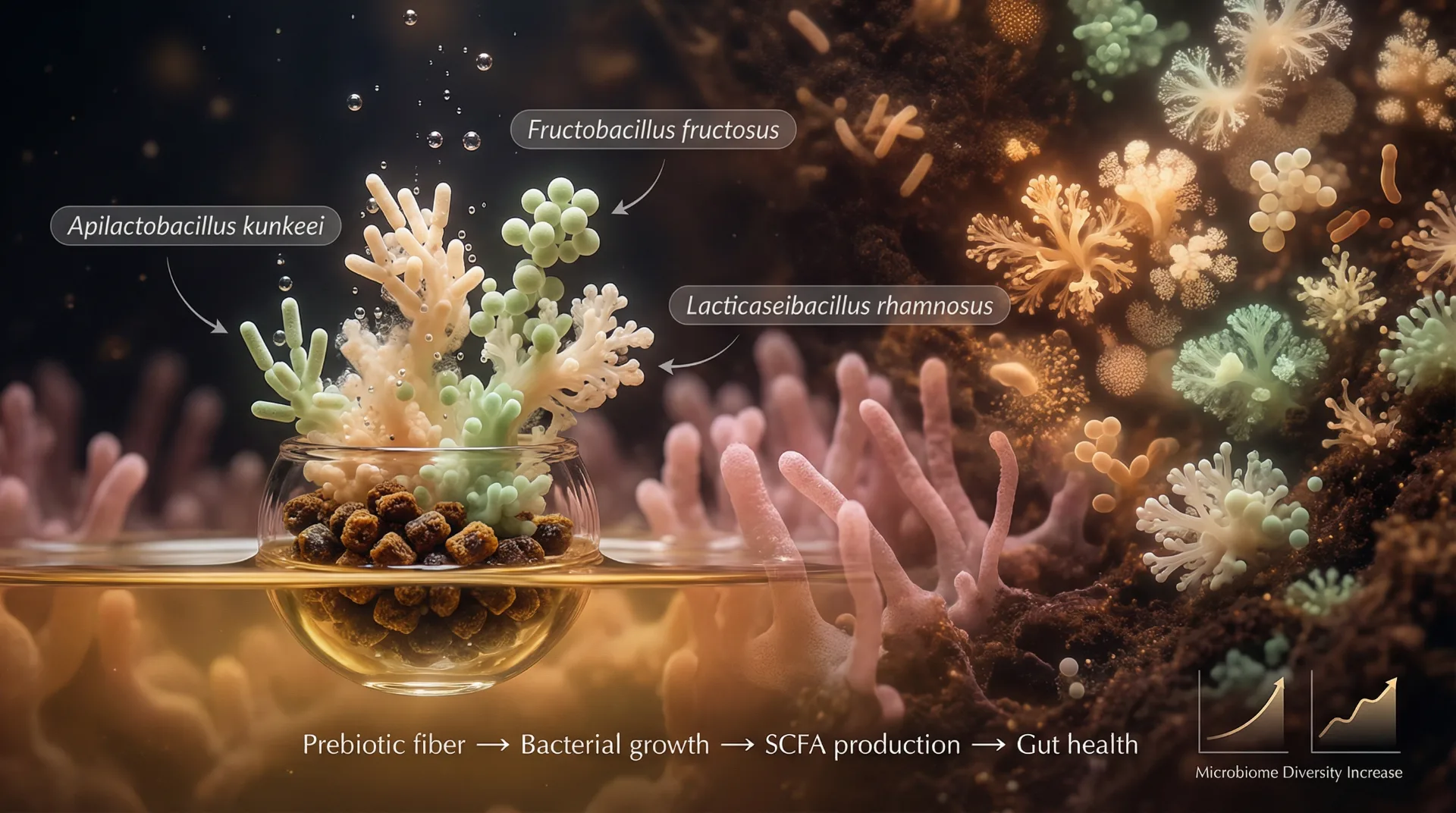
Most fermented foods support digestion. But hive fermentation offers a particularly comprehensive suite of digestive support:
- A complete enzyme spectrum: amylases, proteases, lipases, and glucosidases from bee saliva that begin protein and carbohydrate breakdown
- Increased bioavailability: fermentation breaks down pollen's multilayered cellulose wall (sporopollenin), making nutrients 3x more bioavailable than raw pollen
- Probiotic bacteria: LAB strains that produce bacteriocins and short-chain fatty acids, lowering gut pH and supporting beneficial microbiota
- Organic acids: lactic acid (minimum 3%) that inhibits pathogenic bacteria while preserving digestive balance
The bioavailability advantage:
Fresh bee pollen has only 10-15% digestibility in humans due to its resistant outer wall. Mechanical grinding increases this to about 60%. But bee bread, naturally fermented by the hive, achieves 66-80% digestibility — comparable to high-quality animal proteins.
This means you absorb more from less — and what you absorb is alive with enzymes, probiotics, and bioactive compounds.
Energy: Cellular Fuel, Not Caffeine Spikes
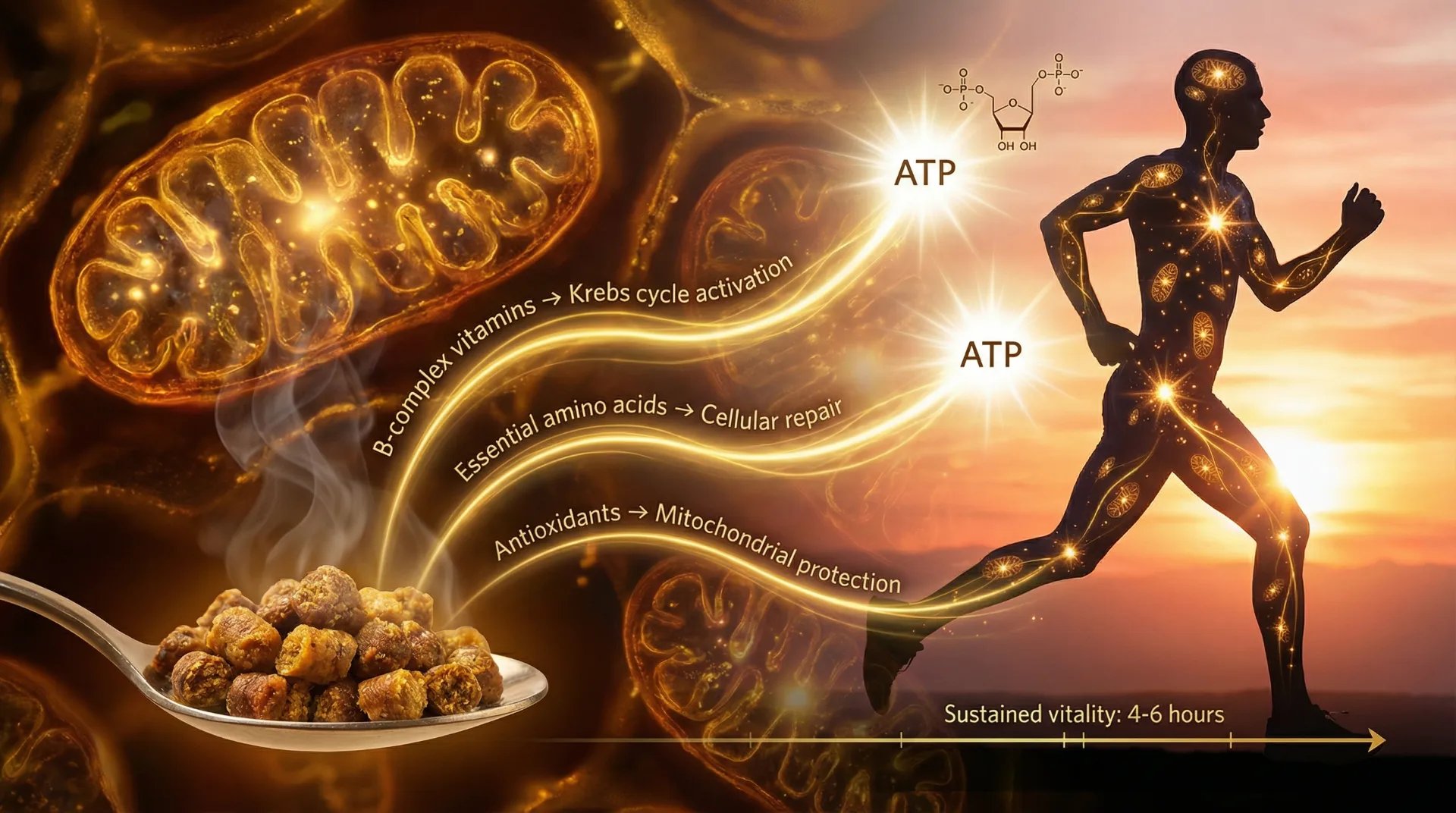
Unlike stimulants that borrow energy from tomorrow, bee bread provides the raw materials for sustainable cellular energy:
- B vitamins (B1, B2, B3, B5, B6, B9) that support ATP production and mitochondrial function
- Complete amino acids including all essential amino acids in bioavailable form
- Bioavailable iron, magnesium, and zinc — cofactors for hundreds of enzymatic reactions
- CoQ10 and rutin — supporting cardiovascular health and oxygen utilization
This is fuel that works with your biology, not against it.
Longevity: The Queen's Secret
In the hive, the difference between a worker bee and a queen is not genetics — it's nutrition. Both begin as identical larvae. The queen is made, not born, through a diet of royal jelly and later, bee bread.
The result? A queen lives 5-7 years. A worker lives 6 weeks.
Same genes. Different food. 50x the lifespan.
While we can't claim the same effects in humans, the mechanism is instructive: nutrition shapes destiny at the cellular level. Bee bread is the food that fuels regeneration in the hive — and its compounds support antioxidant defense, cellular repair, and metabolic efficiency in humans.
The Whole Is Greater
What makes hive fermentation truly special is not any single compound — it's the symphony.
No supplement can replicate the complex interactions between hundreds of plant compounds, multiple bacterial species, enzymatic cascades, and organic acids that emerge from millions of years of co-evolution.
This is not isolated nutrition. This is ecosystem nutrition. And your body knows the difference.
References (3)
- [1]
Khalifa, Shaden A.M., et al. 'Bee bread: An overview of composition, biological activities, and health benefits.' Trends in Food Science & Technology 104 (2020): 1-14.
- [2]
Baltrušaitytė, V., P.R. Venskutonis, and V. Čeksterytė. 'Antibacterial activity of honey and beebread of different origin against S. aureus and S. epidermidis.' Food Technology and Biotechnology 45.2 (2007): 201-208.
- [3]
Pascoal, Ananias, et al. 'Biological activities of commercial bee pollens: Antimicrobial, antimutagenic, antioxidant and anti-inflammatory.' Food and Chemical Toxicology 63 (2014): 233-239.