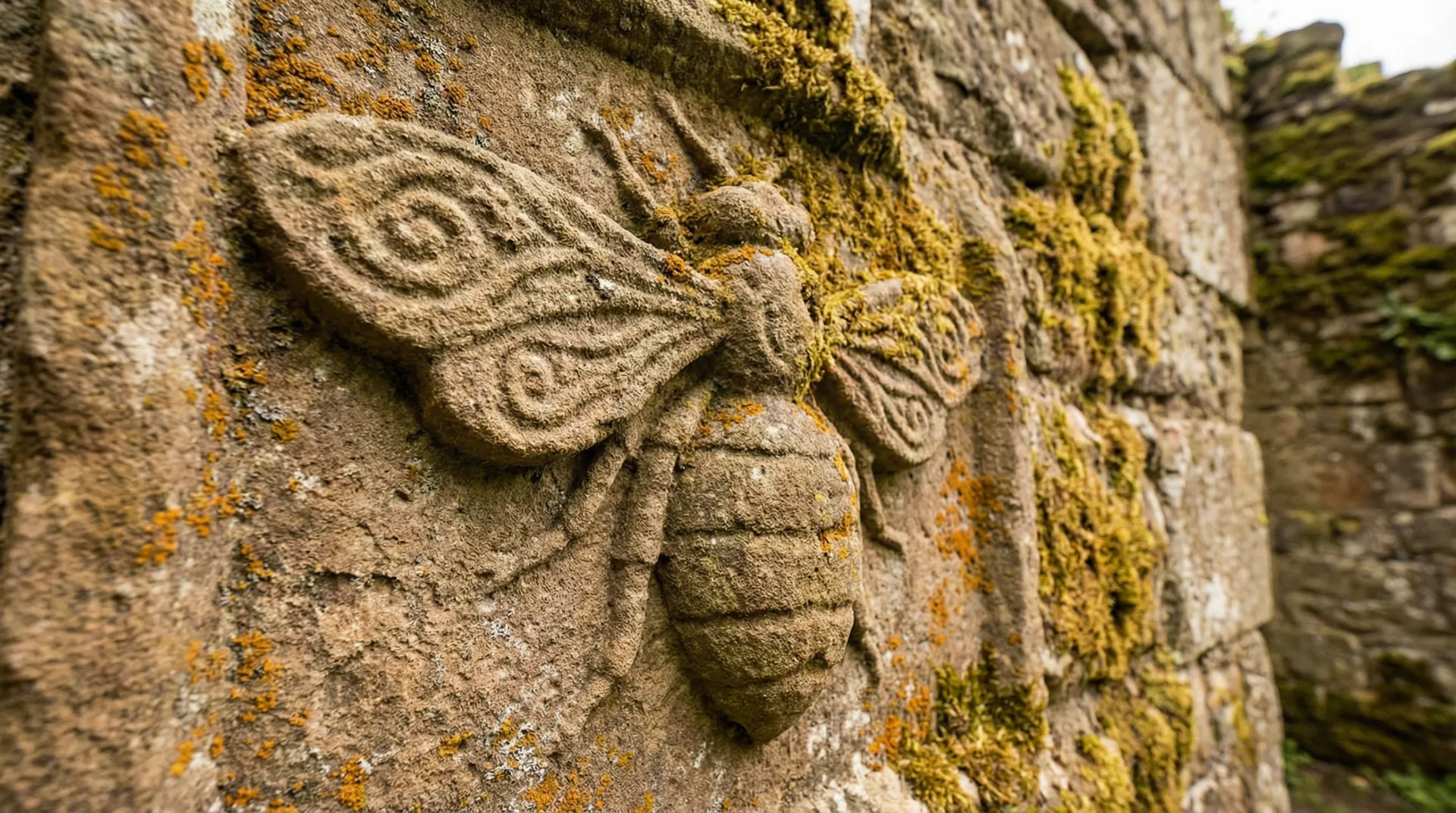
The Myth and the Memory
Bees in the Human Psyche and Sacred Traditions
Before the bee was a pollinator,
Before it was studied, weighed, or harvested,
Before it was domesticated or threatened,
It was worshipped.
Across continents and millennia, the bee has appeared as messenger, mother, oracle, and guide — not because it made honey, but because it carried something between the worlds.
The bee was the symbol of life that sustains, death that sacrifices, and mystery that returns again and again.
In recovering the Fifth Ferment, we are not just reviving an ecosystem.
We are reawakening a lineage of meaning.
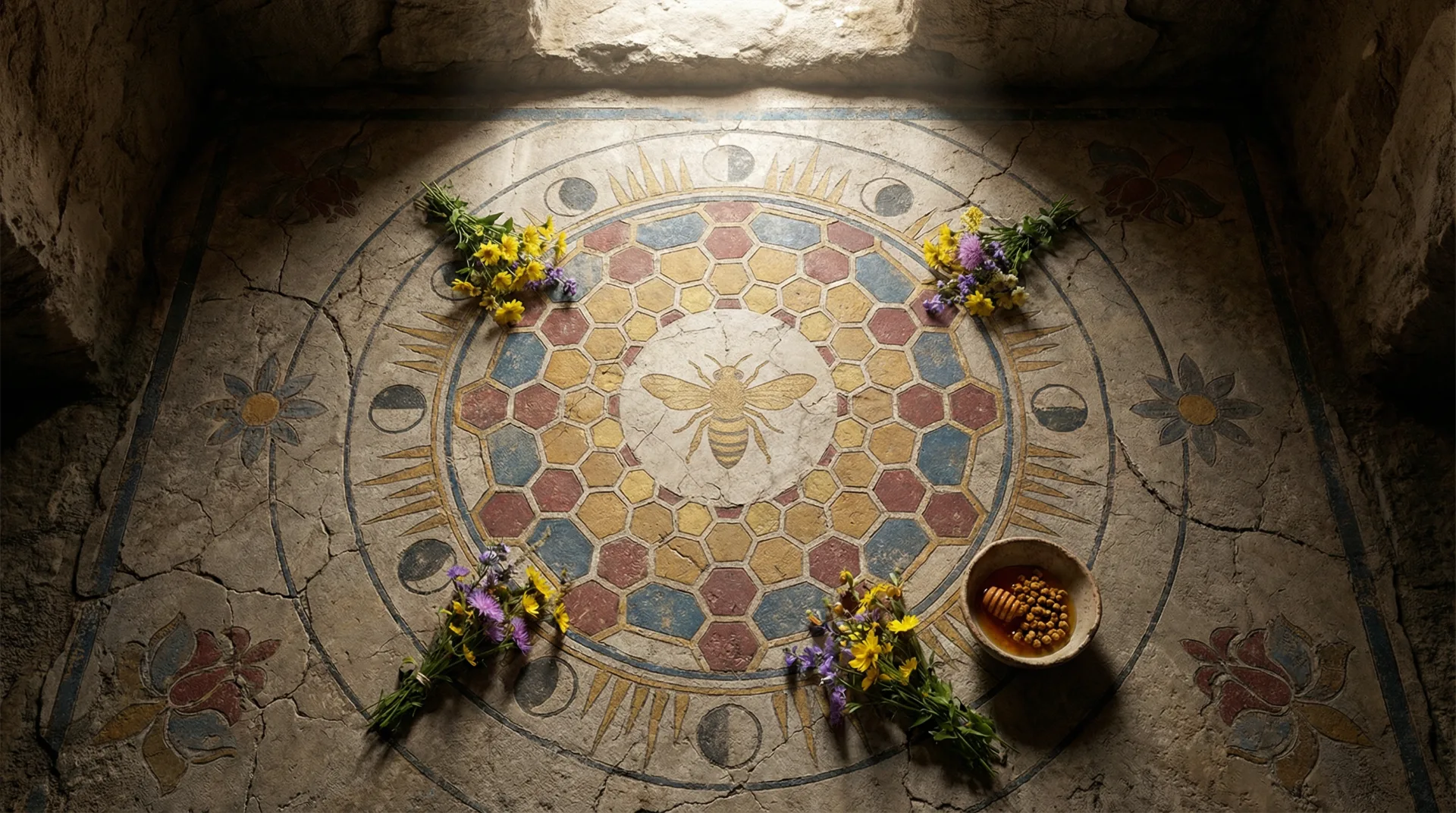
Bees in the Old Traditions
Ancient Egypt
In ancient Egyptian mythology, bees were born from the tears of Ra, the sun god and creator deity.[1][2] According to the Salt Magical Papyrus and other sacred texts, when Ra wept, his tears fell to earth and transformed into bees — making them divine messengers carrying secrets from the gods to humanity.
Pharaohs bore the title "Lord of Bees." The bee hieroglyph appeared alongside royal insignia from at least 3500 BCE, symbolizing sovereignty, wisdom, and divine order. The Nile Delta was called "Land of the Bee," and the goddess Neith's temple at Sais was known as "The House of the Bee."
Minoan Crete and Ancient Greece
In Minoan civilization, the bee was an emblem of Potnia ("Pure Mother Bee"), the mother goddess whose priestesses were called Melissae — literally, "bees."[3] These were not mere attendants but oracles and initiates in mysteries of rebirth and seasonal death.
The tradition continued in classical Greece. Demeter's priestesses were Melissae. The Pythia, Oracle of Delphi, was called "The Delphic Bee." Even the god Apollo learned prophecy from three bee-maidens on Mount Parnassus.
Aristaeus, the culture-bringer, was taught beekeeping by the nymphs and became the patron of apiaries — bee as civilization itself.
Vedic India
In the Rigveda and Upanishads, bees are gatherers of soma, the divine nectar that confers immortality. Honey — madhu — was one of the five sacred elixirs, said to carry truth, light, and the essence of the gods.
Mayan Mesoamerica
The stingless bees of the Yucatán were protected by Ah-Muzen-Cab, god of bees and honey.[4] Beekeeping was a sacred practice, and fermented honey (balché) was central to ceremonial offerings and spiritual rites.
These are not isolated mythologies. They are fragments of a global memory — the memory of a creature who organized life, death, food, fertility, and cosmos.
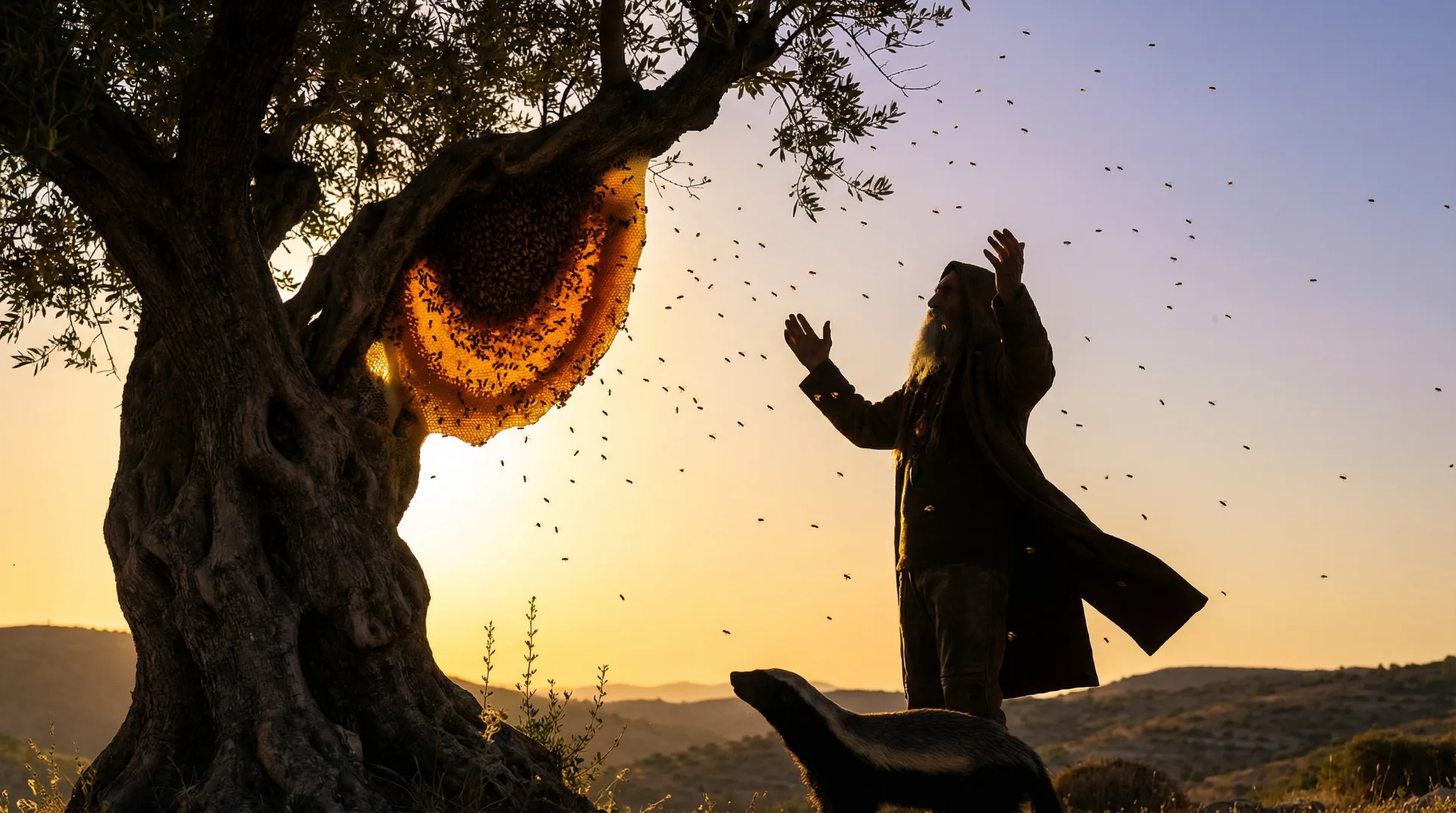
The Hive as Archetype
The beehive is not just a biological structure. It is an archetypal pattern:
- Darkness and alchemy — transformation in sealed chambers
- Rebirth and mystery — larvae becoming winged beings
- Order without dominance — cooperation through distributed intelligence
- Sustenance without greed — producing far more than consumed
- Sacrifice as service — the individual giving to the whole
The hive has been likened to:
- The womb (dark, generative, life-giving)
- The temple (sacred geometry, collective worship)
- The city (organized, productive, hierarchical yet harmonious)
- The brain (hexagonal structure, distributed processing)
It represents what humans once aspired to be: a society in rhythm with life itself.
To remember the hive is to remember how to live together — how to make offerings, how to feed the future.
And to eat its fermented food is not just ingestion. It is initiation.
The Bee as Messenger Between Worlds
Across cultures, the bee has served as psychopomp — a guide between the living and the dead, between the earthly and the divine.
In Celtic tradition, bees carried news between this world and the next. When a beekeeper died, someone had to "tell the bees" — or they would leave, taking their sweetness and blessing with them.
This wasn't superstition. It was recognition that the bee was not merely an animal, but a bridge — between flower and fruit, between death and rebirth, between the unseen and the tasted.
The Fifth Ferment carries this meaning forward. When we eat what the bees have transformed, we are participating in an ancient transaction — receiving wisdom from a source older than memory.
Why Myth Matters Now
We live in an age that has forgotten its stories.
Food has become fuel. Animals have become resources. Nature has become "environment" — something out there, separate from us.
But the old myths remind us: we are not separate. We never were.
The bee was sacred not because it was useful — but because it was wise. And its wisdom is still available to us, encoded in the fermented food it leaves behind.
To receive the Fifth Ferment is to rejoin the myth. To remember what your ancestors knew in their bones.
References (4)
- [1]
Ransome, Hilda M. The Sacred Bee in Ancient Times and Folklore. George Allen & Unwin, 1937.
View - [2]
Kritsky, Gene. The Quest for the Perfect Hive: A History of Innovation in Bee Culture. Oxford University Press, 2010.
- [3]
Wilson, Bee. The Hive: The Story of the Honeybee and Us. John Murray, 2004.
- [4]
Crane, Eva. The World History of Beekeeping and Honey Hunting. Routledge, 1999.